



(Transcript of the „Man of the Day” segment from the show „Ce-i în Gușă, și-n căpușă!” on GOLD FM)
Author: Cozmin Gușă
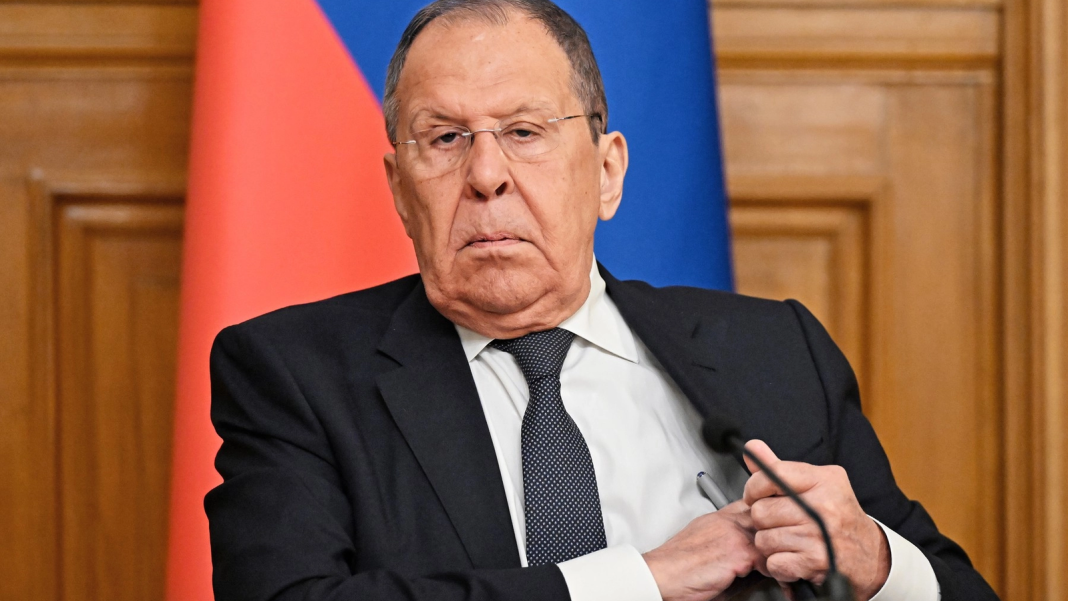
Sergei Lavrov is, in a sense, the dean of the world’s Foreign Ministers. He is also the longest-serving in office, he represents the great Russian Federation, and in any case he is the most prestigious among the world’s top diplomats. He never makes mistakes — I have never seen him make a single one. He always speaks clearly, often harshly, and frequently jokes during interviews with various hosts. He has the great distinction of mastering several foreign languages, including, and take note, Romanian (Sergei Lavrov reads and speaks Romanian). He also has the advantage of having lived for a period in the United States of America, specifically in New York, where his daughter resides to this day. If you want me to draw a comparison with the past, in terms of prestige and gravitas, it is clear to me that Sergei Lavrov is the Kissinger of our times. It is evident that, in terms of authority and influence, he has taken the place of the legendary American diplomat.
Yesterday, however, Sergei Lavrov delivered the single greatest blow to America on the diplomatic front. Why? Because he clearly exposed the cynical, damaging American strategy — the one everyone whispers about in corridors but which not a single diplomat on the planet has had the courage to state openly. Lavrov did it. He launched his offensive from the starting point of Iran and Venezuela, and America’s attacks on those two countries. He said these actions are part of a broader American strategy to influence global energy markets and consolidate its position in the oil and gas sector. Nothing to do with pursuing the liberation of peoples, principles of freedom, voting rights, freedom of expression, fighting dictators — no, none of that. And I quote Lavrov: „The US plans to impose regime change in Iran and Venezuela are, in fact, aimed at gaining greater control over oil and gas resources.”
He then turned to Israel, which, together with the United States, „operates on the principle of divide and conquer. That is how they act in the Middle East, through the Iran war; they do not want normalization of relations between Iran and its neighbors.” He explains that a potential rapprochement between Iran and the other monarchies of the Middle East would sharply reduce military pressures in the region, but would consequently diminish the external influence of the United States and Israel in the Gulf area.
You would not have expected — given the publicly presented closeness between Putin and Donald Trump — that the greatest blow against Trump and against America would come precisely from Sergei Lavrov, who, as I was telling you, is not only the most influential Russian of the moment (the most powerful being Putin), but a man of considerable personal initiative, because he has the freedom, on certain levels, to steer Russian foreign policy himself. That foreign policy, as seen through the lens of this statement, means placing America in maximum difficulty — exposing Donald Trump to humiliation, presenting him as a bigoted, arbitrary leader who, in reality, lies at every turn when he speaks of peace, freedom, democracy, and the fight against dictatorships, while in fact pursuing materialistic, mercenary, pecuniary ends.
If these accusations had come from some journalist, however celebrated or prominent, they would have had some effect — but only so much. Coming, however, from the head of Russian diplomacy, Sergei Lavrov — who is also the prestigious dean of the world’s Foreign Ministers — this is a sledgehammer blow, which, paradoxically, is further amplified by the scandal involving the Hungarian Foreign Minister, whose telephone conversations with that same Sergei Lavrov were intercepted and are being presented as a major strike against the Orbán regime ahead of the elections. I assure you, the effect will be precisely the opposite. Why? Because the kind of dialogue that Szijjártó, the Hungarian Foreign Minister, held with Lavrov is a goal, an ideal, of every diplomacy in Europe. They would all, in truth, want to engage with the powerful Lavrov in exactly that way — a man whose influence reaches across all continents, into all the great powers, and, crucially, into the great geo-economic game as well.
At some point, when the time comes, I will put together a synthesis of Lavrov’s power in world politics, based on data I have studied or have in my possession. Then you will see why even this scandal involving the Foreign Minister is a very interesting projection of power — one that is preparing, in an extremely devious and effective manner, the construction and presentation of the new bridge of Russo-European cultural collaboration.